The clustering factor of the B-treeindex is much nearer to the number of blocks in a table; for that reason, the B-treeindex is efficient for range predicate queries.
A B-treeindex in Oracle’s PL/SQL is a data structure that allows for efficient retrieval of data in a database table. The term “B-tree” stands for balanced tree, and it’s a type of self-balancing search tree data structure.
An OracleB-treeindex is one of the most commonly used types of indexes in Oracle databases. B-tree (short for "Balanced Tree") indexing is a fundamental data structure that enables efficient retrieval of data in a sorted order.
In Oracle SQL, a B-tree index is the default type of index and is commonly used to enhance the performance of SQL queries. It helps speed up retrieval operations by allowing faster access to the rows in a table based on the indexed columns.
This article delves into the intricacies of B-Treeindexes in Oracle, exploring their structure, benefits, practical applications, and a comparison with other index types, including...
This comprehensive guide dives deep into B-Tree, Bitmap, and Function-Based indexes, providing practical examples and insights to help you choose the right indexing strategy for your specific needs.
By default, if we do not mention anything, oracle creates an index as a b-treeindex. But we should know when to use it. B-treeindex stores data as binary tree format. As we know that, index is a schema object which stores some sort of entry for each value for the indexed column.
Oracle AI Database uses a B-treeindex structure to store bitmaps for each indexed key. For example, if jobs.job_title is the key column of a bitmap index, then one B-tree stores the index data.
OracleB-TreeIndex Structure. The above illustration shows a single index. The empty boxes across the bottom represent the associated table’s blocks that the index pointers point to. B-Treeindexes resemble an upside-down tree. This index has a HEIGHT of three.
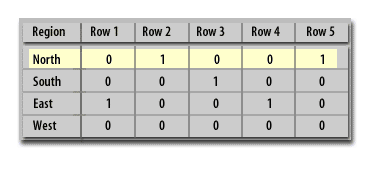 This page describes B-tree and bitmapped indexes for high cardinality data or data with many possible values in Oracle